 Start shipping
When should you rebuild a Bubble app in code?
How to decide whether a Bubble rebuild is justified, what signs point toward code, and when fixing Bubble first is the better move.
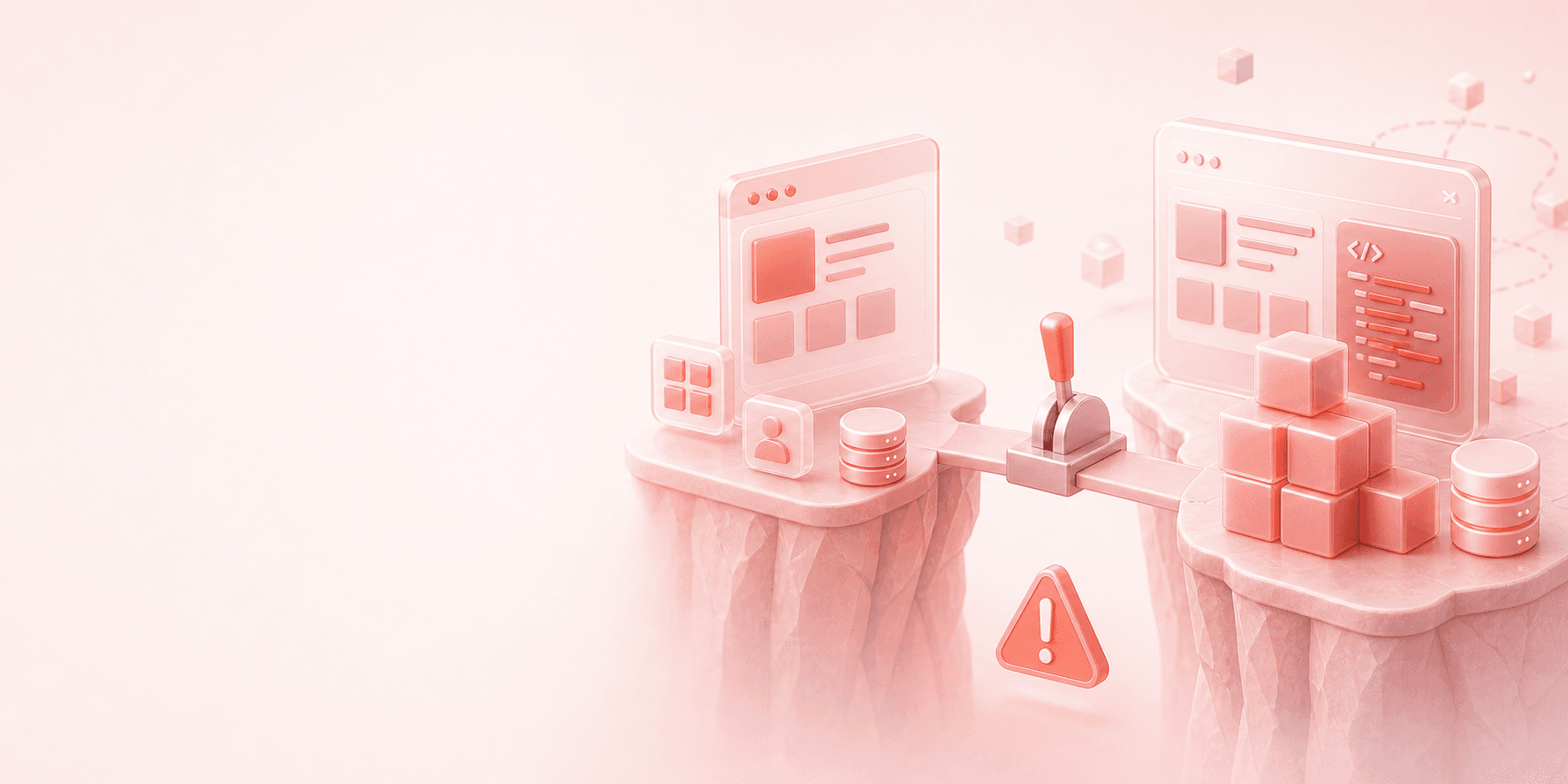
Rebuilding a Bubble app in code can be the right move, but it is a very expensive way to be vague.
If the problem is "Bubble feels limiting", that is not enough yet. You need to know which limit you are hitting, what business risk it creates, and whether code will remove that risk or move the same mess into a different stack.
A good rebuild decision starts with diagnosis. The app has to be understood as a working business system: the data model, workflows, permission model, admin tools, plugin decisions, trusted reports, and the parts nobody wants to touch. Once that is clear, the rebuild question becomes much easier to answer.
Rebuild When The Problem Is Clear
A Bubble app rewrite is reasonable when the current platform is holding back something specific and important: performance under load, release control, hiring, investor concern around platform ownership, or key workflows that have outgrown what Bubble can comfortably express.
The danger is deciding to rebuild before you understand whether the pain is a Bubble ceiling or an app architecture problem. A slow app might be slow because Bubble is the wrong platform for the next stage. It might also be slow because repeating groups load too much data, privacy rules are missing, workflows do unnecessary searches, or pages carry years of conditional logic.
Those are different problems. One points toward a rebuild. The other points toward fixing the Bubble app first.
This is why we usually recommend a migration-focused audit before anyone commits to a full rewrite. The useful output is a practical view of what is worth moving, what should be repaired, what can stay where it is for now, and what order reduces risk.
Signs Code Might Be The Right Move
There are patterns that make a rebuild much more sensible.
The first is platform risk. If the app is revenue-critical, used by serious customers, or part of an investment or acquisition story, owning the codebase can matter. Some teams reach a point where vendor lock-in, platform pricing, infrastructure control, and technical diligence become board-level concerns.
Version control is another big one. Bubble's editor can work well for smaller teams, but serious product development needs clear review, branching, rollback, release history, and confidence about what changed. If every release feels risky, the team will naturally slow down.
Performance under load can also be a real signal. Bubble can go further than many people assume, especially when the app is built well. If the product needs high concurrency, complex search, heavy reporting, or backend processes that need tighter control, code may give you more room to design the system properly.
Workflow complexity matters too. Bubble workflows can become dense over time: custom events calling other custom events, backend workflows scheduled from multiple places, plugin actions with side effects, API Connector calls, conditions on actions, and page state that only makes sense to the original builder. When business logic becomes hard to inspect, test, and change, the risk is no longer theoretical.
Hiring is another practical factor. If you want to build an engineering team around the product, it is easier to hire into a conventional codebase with familiar tooling. Bubble developers can be excellent, but the hiring market is smaller, and senior engineers may be reluctant to own a system they cannot test, review, and deploy in the way they expect.
Ownership is the final signal. If the code is the business, there is a reasonable argument for owning the source, deployment process, data model, and long-term technical direction.
None of these signs automatically mean "rewrite everything". They mean the rebuild conversation is worth taking seriously.
Rebuild Decision Checklist
Before you commit to a rewrite, check whether these are true:
- the current limits are tied to business risk, not vague frustration
- the team knows which workflows need exact parity
- the data migration can be validated against the old app
- the new architecture will remove current constraints rather than copy them
- the business can keep supporting customers during the rebuild
- the team has a plan to own, test, and release the codebase afterwards
Signs Bubble Should Be Fixed First
There are also plenty of cases where a rewrite is the wrong first move.
If the app is still validating product-market fit, Bubble is probably doing its job. You can learn faster, change flows, and avoid spending serious money before the product shape is stable.
If the pain is mostly bad implementation, fixing Bubble may be the highest-return path. Poor naming, messy data types, unindexed searches, missing privacy rules, bloated pages, plugin sprawl, and confusing workflows all make Bubble feel worse than it is. Cleaning the source app first makes the current product safer and any future migration easier.
If the business cannot clearly name the critical flows, that is also a warning. A rebuild team cannot preserve behaviour that nobody can explain. Before writing replacement code, you need to know which workflows create money, change permissions, affect reporting, update subscriptions, or support operations.
Internal tools are another common case. Some admin areas are ugly but stable. If they are low-risk, low-change, and only used by a small team, rebuilding them early may not be worth it. The priority should be the parts of the app that create revenue risk, support burden, security exposure, or development drag.
It is also worth being honest about budget. A proper Bubble app rewrite is expensive. Code gives you control, and it also gives you responsibility for architecture, hosting, maintenance, observability, QA, security, and developer process.
Why A 1:1 Rebuild Usually Carries Debt Forward
A like-for-like rebuild sounds safe because it feels conservative. Copy every page, workflow, and data type. Then launch the same product in code.
Bubble apps usually contain years of product history. Some of that history is valuable. Some of it is old workaround logic, plugin constraints, rushed decisions, naming drift, duplicated fields, and admin actions that should have become product flows.
If you copy the app too literally, you risk rebuilding the old constraints inside the new system. The stack changes, but the product model stays confused. You still have the same awkward permissions, unclear workflow ownership, reporting assumptions, and fragile operational processes.
The better approach is to separate behaviour from implementation. Some behaviour must be preserved exactly because users, reports, contracts, or internal teams depend on it. Some behaviour should be redesigned because it only exists to work around Bubble, a plugin, or an old product decision.
That distinction is where a rewrite becomes useful. You are paying for a system that reflects how the business works now.
Decide Before You Commit
Before committing to a full rewrite, you need a few answers.
What are the critical flows? These are the flows where a bug would affect revenue, data integrity, customer trust, compliance, or support load.
What data must be preserved? This includes record counts, relationships, files, roles, historical activity, billing state, permissions, and old edge cases. Data migration is complete when the migrated system can be checked against the reality of the old one.
What can be improved before migration? Sometimes the best first step is to reduce Bubble debt, stabilise fragile workflows, and make the app easier to reason about. That can reduce current risk and make any future rebuild more accurate.
What should move first? Page order is rarely the right migration order. The safer sequence is usually based on business risk: reporting, onboarding, billing, admin operations, customer-facing workflows, or whatever is creating the most pain.
How will the business keep shipping? A six-month freeze is rarely realistic. Customers still need support, bugs still appear, and competitors do not wait while the rewrite happens. For serious apps, the migration plan should usually keep the Bubble app running while the new system is built and validated in stages.
If you want the broader migration mechanics, we have a separate guide on moving a Bubble app to code. This article is really about the decision point: whether the rebuild is justified in the first place.
The Sensible Next Step
If you are considering a Bubble app rewrite, I would not start with a tech stack debate.
Start with a technical review of the app you already have. Understand the workflows, data, permissions, integrations, performance issues, plugin dependencies, and business-critical edge cases. Then decide whether to fix Bubble, rebuild part of the product, or plan a full move to code.
That is what our migration-focused audit is designed to do. It gives you a grounded view of whether a rebuild is worth it, the risks, and how to approach it without turning the migration into a cliff-edge project.
Sometimes the answer is "yes, rebuild". Sometimes it is "fix the app first". Either way, you want that answer before you spend months and serious budget proving it the hard way.
Questions This Guide Answers
When should you rebuild a Bubble app in code?
A rebuild is worth considering when the app is business-critical and Bubble is limiting performance, release control, hiring, technical diligence, complex permissions, or long-term ownership.
When should you fix Bubble before rebuilding?
Fix Bubble first when the main pain comes from messy workflows, broad searches, missing privacy rules, plugin sprawl, unclear data structure, or pages nobody has properly maintained.
Is a 1:1 Bubble rewrite a good migration strategy?
Only as a discovery tool. A useful migration preserves the behaviours the business relies on while redesigning the parts of the Bubble app that created the original pain.