 Start shipping
The serious founder's guide to migrating a Bubble app to code
A practical guide to moving a revenue-critical Bubble app to code without corrupting data, freezing product development, or forcing customers through a risky switch.
There are plenty of good reasons to move a Bubble app to code.
Maybe the app has grown past the team that originally built it. Maybe performance has become painful. Maybe your customers, investors, or internal team are starting to ask sensible questions about platform risk. Maybe you have reached the point where the product is important enough that you want more control over the architecture.
Those are all reasonable conversations to have. The mistake is treating migration as a stack decision before anyone has properly understood the app.
If I was looking at your Bubble app, I would not start by asking whether you should use Next.js, Rails, Supabase, Postgres, or whatever else. I would start by trying to understand what the app actually does, which parts of it carry business risk, and whether moving to code is likely to solve the problem you are trying to solve.
Sometimes migration is the right answer. Sometimes the better answer is to fix the Bubble app properly and keep building. You only know which camp you are in once you understand the system in front of you.
Work Out Why You Want To Leave Bubble
A lot of migration conversations start with a vague feeling that Bubble has become the problem.
That feeling can be right, but it is worth being precise. "Bubble is slow" might mean the app is loading too much data on the page. "Bubble does not scale" might mean the database structure is awkward, privacy rules are missing, or key workflows are doing expensive work in the wrong place. "We need more control" might mean the team needs better engineering practices, not necessarily a full rebuild.
There are also cases where the platform really is the ceiling. If you need a level of infrastructure control, custom backend behaviour, developer tooling, testing, deployment process, or integration architecture that Bubble cannot reasonably support, moving to code can make sense.
The point is to separate the platform problems from the app problems. If the app is badly structured on Bubble, copying the same assumptions into code will not make it good. It will just make the same problems more expensive to fix.
Audit The App Before Estimating The Rebuild
I would be very careful with anyone who gives you a confident fixed estimate for a serious Bubble migration without looking inside the app.
Bubble apps tend to hide important logic in places that are easy to miss from the front end: conditional formatting, privacy rules, reusable elements, backend workflows, plugin actions, API Connector calls, page-level data sources, and old admin workarounds that became part of how the business operates.
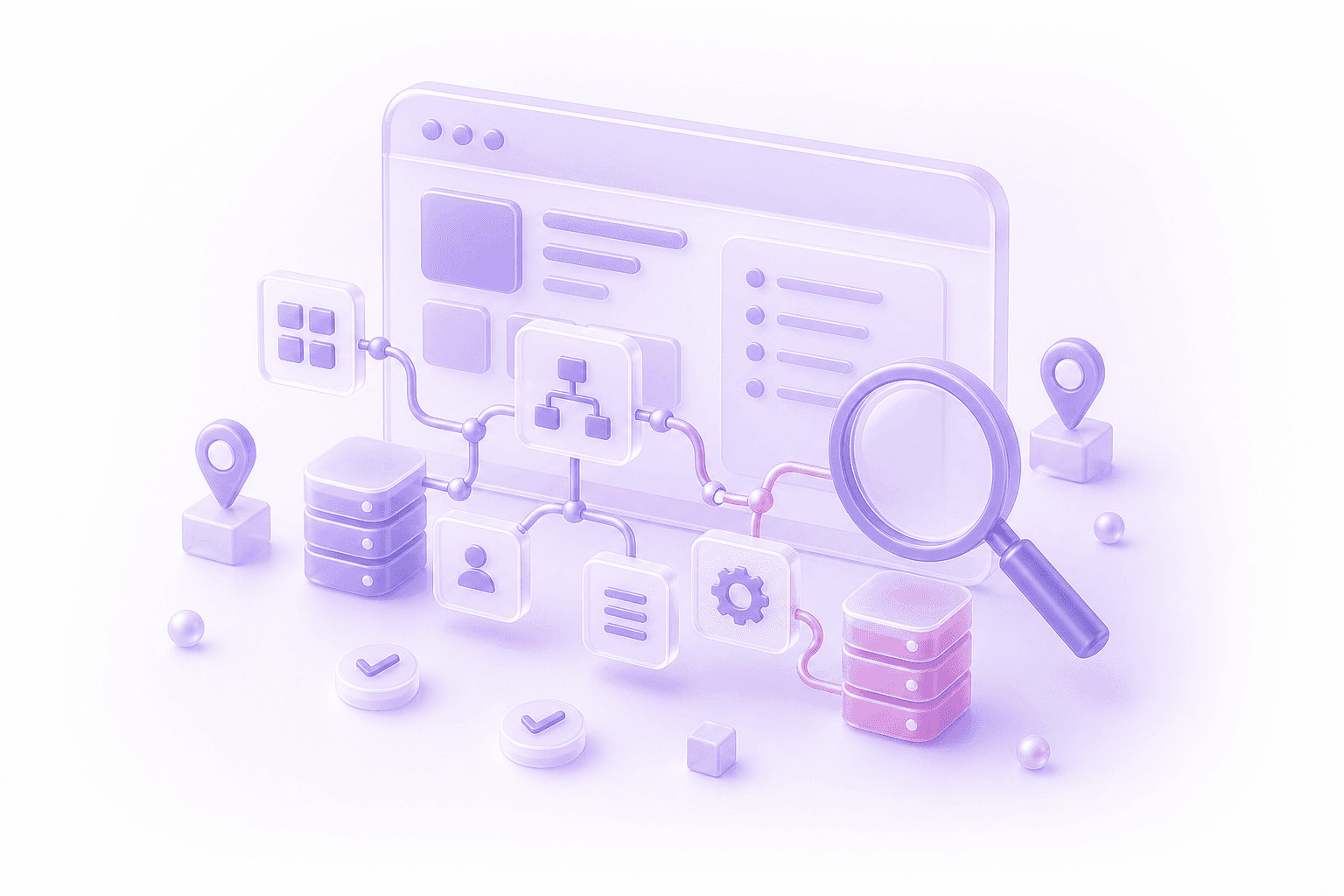
The first useful step is a proper technical review. You need to understand what the app does, where the important data lives, which workflows create or change that data, what the permission model is supposed to be, which integrations matter, and which parts of the app are fragile.
At minimum, I would want to understand:
- the flows that create, edit, or delete important records
- the flows that affect billing, onboarding, reporting, support, or compliance
- the user roles and what each role should be able to see or do
- the main data types and the relationships between them
- all third-party integrations, webhooks, scheduled workflows, and plugin dependencies
- the admin workflows the team relies on to keep the business running
- the parts of the app nobody likes touching
That last point is usually useful. If everyone avoids a page or workflow because it is slow, confusing, or easy to break, it probably needs special attention before anyone writes a line of replacement code.
Bubble Migration Checklist
Before you scope the rebuild, get clear answers to these:
- what problem is the migration meant to solve?
- which workflows create, edit, delete, or expose important data?
- which data must be preserved, reconciled, archived, or cleaned up?
- which permission rules need exact behaviour in the new system?
- which parts of the current app are workaround logic rather than product logic?
- how will the business keep shipping while the migration happens?
Treat Workflows As Product Logic
Screens are usually the easiest part to understand. Workflows are where the product really lives.
A button might look simple in the editor, but behind it you can have conditions, database changes, API calls, emails, role checks, scheduled workflows, and side effects that only happen for certain users. A migration plan has to capture that behaviour in enough detail that the new system can be tested against it.
This is where Bubble-specific experience matters. A code team can look at a Bubble app and see pages, tables, and rough user flows. That is not enough. They need to understand how Bubble apps are actually built, where developers hide state, how privacy rules work, how reusable elements pass data around, and which plugin behaviours are doing something important.
The reverse is also true. A Bubble-only team can understand the old app extremely well, but still carry Bubble patterns into the new codebase when better options exist. The migration needs both: enough Bubble knowledge to avoid missing the old behaviour, and enough code experience to avoid rebuilding Bubble with a nicer syntax.
Data Migration Needs Proof
Data migration is the part I would be most careful with.
An export and import script is only one part of the job. The real question is whether you can prove the new system matches the business reality of the old one.
That means checking record counts, linked data, files, permissions, reports, billing state, user roles, historical activity, and anything else the business depends on. It also means checking the awkward cases, because those are usually where the damage happens: cancelled subscriptions, deleted users, manually edited records, old customers on legacy plans, imported data from previous systems, and records created by workflows that no longer exist.
The dangerous data migration problems are often quiet. The app might load, users might log in, and the dashboard might look fine while reports are wrong or permissions are too broad. That is why validation matters more than confidence.
Avoid The Six-Month Black Box
The worst version of a migration is where the Bubble app effectively freezes while a separate team disappears for months to rebuild everything somewhere else.
The business does not stop during that period. Customers still ask for changes. Bugs still appear. Internal processes still evolve. By the time the new system is ready, there is a good chance the old app has moved on and the new codebase is already behind.
For most live apps, I would rather see a staged plan. Keep Bubble running where it is doing useful work. Rebuild the riskiest or most valuable modules in a sensible order. Validate each module with real data. Move users or teams in controlled groups where possible.
The exact rollout depends on the app. You might start with admin tools, reporting, a new onboarding flow, a specific customer cohort, or a part of the product that is already causing pain. What matters is that the migration sequence is tied to business risk rather than page order alone.
Use The Move To Improve The Architecture
A migration is a good chance to fix the assumptions that made the Bubble app painful.
If the current data model is hard to work with, change it. If permissions have become messy, design the access model properly. If important workflows rely on old product decisions, rebuild them around how the product works now. If support depends on manual admin actions, decide whether those actions should become proper product flows.
This is where a like-for-like rebuild can be a waste of money. Some behaviour should be preserved exactly because customers rely on it. Some behaviour should be deliberately changed because the old version was only there to work around Bubble, a plugin limitation, or a rushed decision from two years ago.
The migration plan should separate those two categories. Preserve what the business needs. Improve what the old architecture made painful.
Decide What Should Stay In Bubble For Now
Moving to code does not have to mean moving every part of the app at once.
There may be parts of the product that Bubble still handles well. There may be internal tools that are not worth rebuilding yet. There may be admin workflows where the cost of migration is higher than the value you get back. In some cases, keeping a small part of Bubble alive during a transition is much more sensible than forcing everything through one launch date.
This is not a philosophical decision. It is a practical one. If a part of the app is low-risk, low-change, and working well enough, it may not need to be first in the queue.
The priority should be the parts of the system that block growth, create support load, slow development, create security risk, or stop the team shipping confidently.
Build Correctly On Bubble If Migration Is Still A Year Away
If you think you might migrate in the future, the best thing you can do now is build the Bubble app properly.
That might sound counterintuitive, but it is the practical answer in most cases. A maintainable Bubble app is easier to keep scaling and easier to migrate later. A messy Bubble app gives you pain in both directions: it slows current development, then makes the eventual migration harder because nobody fully trusts the source system.
Good naming, clear data structures, sensible privacy rules, reusable elements, backend workflows, useful documentation, and a clean product model all pay off whether you stay on Bubble or leave.
If the plan is "we will just migrate later", the app still needs to survive until later.
The Sensible First Step
I would start with a migration-focused audit.
Not a generic SEO-style audit or a list of Bubble best practices. A proper migration-focused review of the app as a business system: what it does, where the risk is, what can be improved on Bubble, what should be rebuilt in code, and what order makes sense.
The useful output is a decision, not a sales pitch. You should know whether migration is actually the right move, what it would involve, what can be fixed before migrating, and what the first few stages should look like.
If migration is right, the audit gives the rebuild a sensible starting point. If migration is not right yet, you still get a clear plan for making the Bubble app faster, safer, and easier to work on.
That is the way I would want someone to approach it if it was my business on the line.
Questions This Guide Answers
Should every serious Bubble app migrate to code?
No. Some serious Bubble apps should be cleaned up and kept on Bubble. Migration makes sense when the app needs control, testing, ownership, performance, or release discipline that Bubble cannot reasonably provide.
What should happen before estimating a Bubble migration?
A technical review should inspect workflows, data, permissions, integrations, admin processes, files, and rollout risk. Without that, the estimate is usually based on visible screens rather than the system the business actually runs on.
Can a Bubble app be migrated in stages?
Yes, and staged migration is usually safer for live apps. The order should follow business risk, data dependencies, and customer impact rather than page order.