 Start shipping
How to tell whether Bubble technical debt means fix or migrate
How to distinguish Bubble implementation debt, product-model debt, and platform constraints before deciding whether to fix Bubble, prepare migration, or move to code.

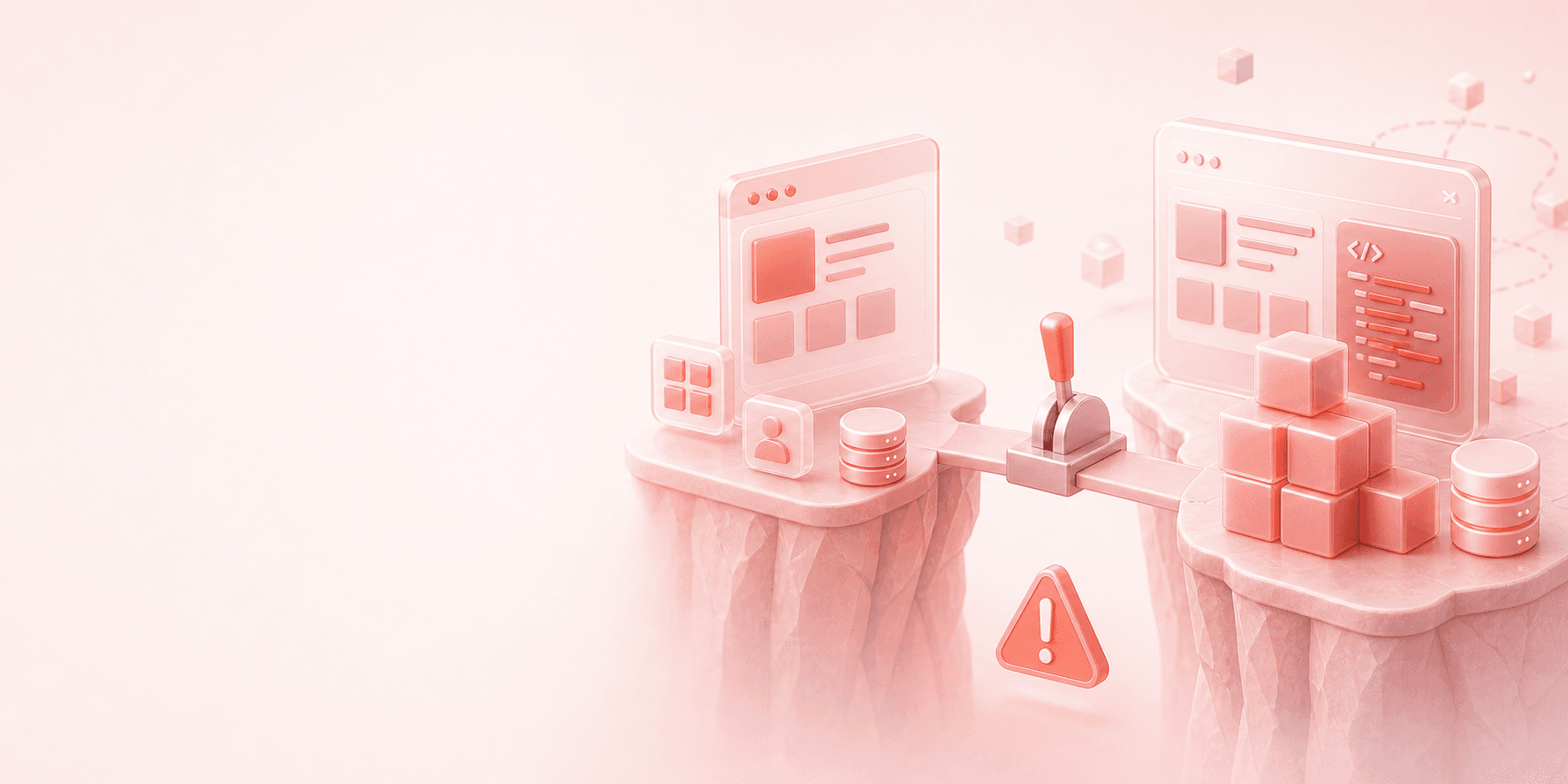
Bubble technical debt is not one problem. Some of it is normal implementation mess: old workflows, unclear naming, plugin sprawl, and pages that got heavier every time the product changed. That can often be fixed inside Bubble.
Some of it is product model mess: the app's data types, roles, states, and permissions no longer match how the business works. That should usually be cleaned up before migration, otherwise the same confusion gets rebuilt in code.
And some of it is a real platform constraint: source control, testable backend logic, infrastructure control, deeper integrations, or performance characteristics that Bubble is not the right place to keep fighting.
The useful question is not "do we have technical debt?" If the app has been alive for a while, yes, you do. The better question is what kind of debt it is, and whether the next sensible move is to fix Bubble, prepare for migration, or migrate now.
Technical Debt Is Not Automatically A Bubble Problem
A slow page might be slow because Bubble is the wrong platform for the next stage. It might also be slow because the page loads too much data, searches are repeated in conditions, privacy rules are missing, or workflows are running actions that should have been moved to the backend.
Those are different diagnoses. If performance is the main pain, start with the mechanics in the current app. Our Bubble app gets slow guide covers this in more detail, but the cause is often data shape, page structure, workflow design, or privacy rules before it is a pure platform ceiling.
The same applies to maintainability. A messy Bubble app can feel like evidence that the business has outgrown Bubble. Sometimes that is true. Sometimes the app just has no consistent patterns: every page was built by a different person, workflows have no clear ownership, option sets are being used as logic, and admin actions exist because nobody built proper product flows.
Moving that into code too early does not make it clean. It usually makes the same uncertainty more expensive.
Implementation Mess Usually Wants A Bubble Fix
Implementation debt is the stuff that makes the existing Bubble app harder to work on than it needs to be, but does not prove the platform is wrong.
Common examples are duplicated workflows, confusing custom events, no naming conventions, old plugin actions nobody trusts, data searches buried in conditions, and reusable elements that pass state around invisibly.
This kind of debt is annoying, but it is often fixable. You can rename things, consolidate workflows, move logic into clearer custom events, remove unused plugins, document important flows, tighten privacy rules, and split heavy pages.
If every change requires half a day of detective work, the platform is not the only cost. The team slows down, QA gets thinner, and the business starts avoiding changes it actually needs. If the app is still mostly working and the product direction is still changing, fixing Bubble can be the highest-return move.
Product Model Mess Needs More Care
Product model debt is different. This is where the app's structure no longer matches the business.
Maybe the User type is carrying account data, profile data, team membership, onboarding state, subscription flags, role logic, and admin permissions. Maybe a Project or Request type now represents five different things. Maybe lists are being used because they were convenient, but the business now needs proper membership history, audit trails, reporting, and permissions.
This kind of debt is architecture work rather than a small Bubble clean-up task.
You need to work out what the real entities are, which relationships matter, which states are legitimate, which fields are facts, and which behaviours only exist because of old product decisions. If you migrate before doing that thinking, the new database will probably inherit the old assumptions.
This is why data migration is rarely just export and import. A serious migration treats the Bubble database as evidence, not as a perfect design document. The current records show what the business has been doing; the new model should describe what the business now needs to maintain. We cover that in our guide to Bubble data migration.
Product model debt often points to a prepare-migration phase. You may still decide to stay on Bubble for now, but you should start separating workaround logic from genuine product logic. Clean naming, clarify statuses, document permissions, and decide which parts of the current data structure are temporary.
If you stay on Bubble, that work makes the app safer. If you migrate later, the rebuild team has a clearer source system to work from.
Platform Constraint Debt Is The Real Migration Signal
If the app is revenue-critical, has a growing engineering team, needs proper code review, requires automated testing, depends on complex backend processes, or has infrastructure requirements Bubble cannot reasonably support, migration becomes a more serious conversation.
Version control is a common signal. Bubble's editor can be fine for smaller teams, but serious product development often needs pull requests, review history, automated checks, rollback discipline, and clearer deployment control. If releases feel risky because nobody can confidently inspect what changed, the team will naturally become cautious.
Integrations and performance can also become real signals. Bubble can go further than many people assume, but if the product needs queues, retries, observability, high concurrency, complex querying, or heavy reporting, the economics of staying can change.
The important bit is specificity. "Bubble feels limiting" is too vague. "Our billing workflow is difficult to test, our reporting queries are too slow under real customer data, and our team cannot release safely without better review and rollback" is a real migration argument.
Fix Bubble, Prepare Migration, Or Migrate Now
Use this table as a starting point. It is deliberately practical, because the decision should come from evidence in the app rather than vibes.
| Fix Bubble | Prepare migration | Migrate now |
|---|---|---|
| Mostly messy workflows, naming, page structure, plugin sprawl, or avoidable performance issues. | The product model is unclear, but the app is still operating. | The platform blocks release control, testing, infrastructure, performance, hiring, or customer/investor confidence. |
| The business still needs fast iteration more than a new architecture. | The team cannot yet explain critical flows, permissions, data dependencies, or migration order. | The app is revenue-critical and the current constraints create commercial risk. |
| The core product still fits Bubble reasonably well. | Important workflows are tangled with workarounds, admin shortcuts, or plugin decisions. | The cost of staying is now higher than the cost and risk of a staged rebuild. |
| Next move: consolidate workflows, improve privacy rules, reduce page load, document critical flows, and remove dead features. | Next move: audit workflows, map data, identify exact-parity behaviour, and decide what moves first. | Next move: staged migration with data validation, rollout sequencing, and code architecture the team can own. |
No table can make the decision for you, but this split usually reveals the shape of the problem. If all the evidence sits in the first column, a rewrite may be a very expensive avoidance strategy. If most of the evidence sits in the middle, slow down and understand the app before committing. If the right column is obvious and tied to business risk, migration may be worth planning properly.
For the broader decision, read our guide on whether to rebuild a Bubble app in code. For the practical migration mechanics, the better starting point is moving a Bubble app to code.
Clean Up Before You Move
The messiest migrations usually start with a vague promise to rebuild everything properly later. Later rarely arrives cleanly. The rebuild team still needs to preserve existing behaviour, customers still need support, and nobody wants to break billing, permissions, reporting, or onboarding.
Cleaning up before migration does not mean polishing every corner of the Bubble app. It means reducing the uncertainty that would otherwise get copied into the new system.
Start with the flows that matter commercially: workflows that create revenue, update subscriptions, change user access, affect reporting, expose private data, or support operations. Those need to be mapped clearly.
Then look at the data model. Which data types represent real business entities? Which fields are duplicated, temporary, derived, or only there for display? Which list fields should probably become proper relationships in code? Which option sets are labels, and which are actually business states?
Then check permissions. Bubble privacy rules, page conditions, admin flags, role fields, and workflow checks often combine into a permission model that exists more by accumulation than design. A migration is a bad time to discover that nobody knows why a certain customer can see a certain record.
Do Not Let A 1:1 Rebuild Preserve The Wrong Debt
A like-for-like rebuild sounds safe because it avoids product debate. Copy the pages, copy the workflows, copy the database, launch the same app in code. That can be reasonable for small, simple tools. It is usually dangerous for serious apps.
Bubble apps often contain years of product history. Some of that history is valuable behaviour that users depend on. Some of it is workaround logic from a plugin limitation, a rushed launch, an old pricing model, or a one-off admin fix that quietly became part of operations.
The migration plan should separate those things. Preserve behaviour that matters. Redesign structures that only exist because the old app grew around constraints.
The Sensible Next Step
If you are trying to work out whether Bubble technical debt means "fix" or "migrate", start with a technical review of the app you already have.
Not a generic best-practice checklist. A useful review should inspect the data model, workflows, privacy rules, performance issues, plugins, integrations, admin operations, and the parts of the app the team avoids touching. It should tell you which debt can be cleaned up inside Bubble, which debt should be resolved before migration, and which constraints make a staged move to code sensible.
That is what our migration-focused audit is for. The goal is to make the decision obvious enough that the next step is practical.
Sometimes the right answer is to fix Bubble properly and keep shipping. Sometimes it is to clean up the source app so a future migration is less risky. Sometimes the app really has outgrown the platform and needs a staged move to code.
The debt is useful once it tells you which of those is true.
Questions This Guide Answers
What counts as Bubble technical debt?
Technical debt can include messy workflows, duplicated logic, unclear data types, privacy rule gaps, plugin sprawl, slow pages, brittle admin tools, and business rules hidden in the UI.
Should Bubble technical debt be fixed or migrated?
It depends on whether the pain is implementation debt inside Bubble or a genuine platform constraint. A good audit separates the two before the business commits to a rebuild.
How do you know when tech debt means move to code?
Moving to code becomes more compelling when the debt blocks safe releases, hiring, testing, performance, diligence, security, or product work the business now depends on.